Write It Ugly First: Why Your Worst Draft Is Still Better Than Nothing
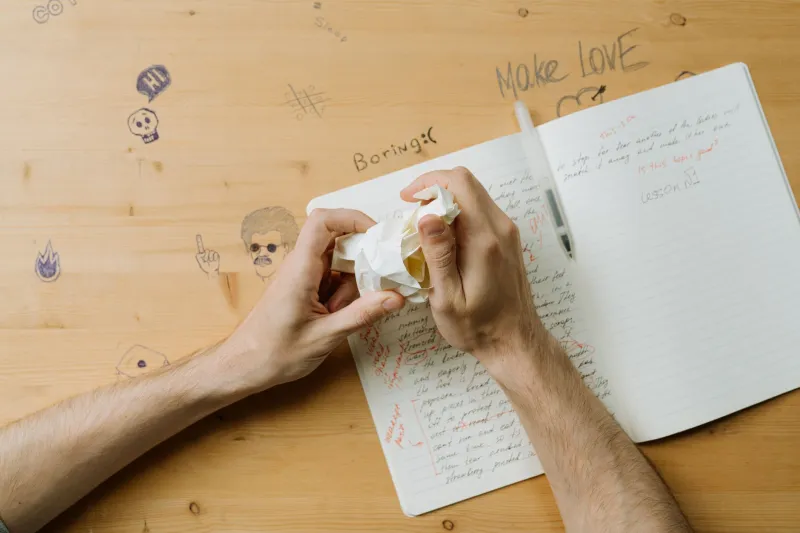
Here's a confession most writers won't make out loud: the first draft of almost everything is genuinely terrible. Not "needs a little polish" terrible. Not "just a few tweaks" terrible. We're talking rambling, repetitive, occasionally incoherent, and sometimes embarrassing-to-reread terrible.
And that's completely fine.
In fact, it's not just fine — it might be the whole point.
If you've been sitting on a story, an opinion piece, or a personal essay because you're waiting for the version in your head to match the words on the page, this one's for you. Because that gap you keep feeling? Every writer feels it. The difference between people who publish and people who don't usually has nothing to do with talent. It has everything to do with whether they're willing to push through the ugly middle part.
The Perfectionism Trap (And Why It Feels So Reasonable)
Perfectionism is sneaky because it disguises itself as quality control. It tells you that you're protecting your work. That you're not ready yet. That one more round of planning, one more outline, one more night of sitting with the idea will finally produce the version worth sharing.
Spoiler: it won't.
What perfectionism is actually doing is keeping you in a consequence-free zone. You can't be criticized for something you never published. You can't be misunderstood, judged, or ignored if the post never leaves your drafts folder. Perfectionism offers the illusion of progress while quietly making sure nothing actually ships.
Psychologists sometimes call this "self-handicapping" — setting up conditions that protect your ego before you even try. If you never finish, you never fail. But here's the uncomfortable flip side: if you never finish, you never succeed either.
Your Brain Lies to You About What "Ready" Means
There's a reason the piece in your head always sounds better than the piece on the page. Your brain fills in gaps automatically. When you imagine your essay, your mind supplies the perfect transitions, the exactly-right word choices, the emotional resonance you're hoping for. The actual act of writing forces you to make those vague impressions specific — and specificity is hard.
This is why so many writers describe a first draft as "thinking out loud." You don't actually know what you believe about something until you try to articulate it. The messy, contradictory, half-formed first draft isn't a failed version of your idea — it's the discovery of your idea. You're not transcribing a finished thought. You're building one.
Once you reframe the first draft as a thinking tool rather than a publishing product, the pressure drops significantly. You're not writing for an audience yet. You're writing for clarity.
Separate the Creator from the Editor (Seriously, Keep Them Apart)
One of the most practical shifts you can make is treating creation and editing as two completely separate sessions — ideally on different days, or at minimum with a real break in between.
When you write and edit simultaneously, you slow yourself down to the speed of your most critical inner voice. Every sentence gets second-guessed before it's even finished. You end up with paragraphs that are technically polished but emotionally flat, because you've edited out all the instinct.
Try this instead: set a timer for 20 or 25 minutes and write without stopping, without deleting, without rereading. If you hate a sentence, leave it and keep going. If you lose the thread, write "I lost the thread, let me try again" and keep going. The goal isn't quality — it's volume. Get the raw material on the page first.
Then walk away. Make coffee. Go for a walk around the block. Come back later with your editor hat on, and then you can cut, rearrange, and refine. You'll have something to work with. That's the whole game.
The Delete Button Is Not Your Friend Right Now
There's something almost compulsive about the delete key when you're writing something personal. A sentence comes out awkward, and before you've even finished reading it back to yourself, your finger is already moving. Gone.
But here's what you're actually deleting half the time: the honest version. The clunky sentence that came out weird because the feeling underneath it is real and complicated and doesn't fit neatly into polished prose. When you delete too fast, you lose the texture of your actual voice and replace it with something safer and more generic.
Give yourself a rule: in a first draft, you can add, but you can't delete. Not yet. Highlight something in yellow if you hate it, write a note in brackets like [fix this later], but leave it there. You might surprise yourself when you come back — sometimes the ugly sentence is actually the truest one in the whole piece.
Sharing Something Imperfect Will Always Beat Sharing Nothing
Let's be honest about what's at stake here. You're on a platform like VoiceItOut because you have something to say — a perspective, a story, an experience that belongs in the conversation. Every day you spend waiting for the perfect version is a day that voice goes unheard.
Readers aren't looking for flawless. They're looking for real. Some of the most-read, most-shared posts on community platforms are the ones that feel a little rough around the edges, because rough edges signal humanity. They signal that a real person sat down and struggled to say something true.
Perfect writing can actually create distance. It can feel like a performance. Honest writing — even when it's imperfect — creates connection. And connection is what this whole thing is about.
A Few Practical Things That Actually Help
If you're chronically stuck in the pre-draft phase, here are some low-stakes ways to break the cycle:
Lower the stakes on purpose. Tell yourself this draft will never be published. Write the version you'd send to one friend in a text message. Take all the performance pressure off and see what comes out.
Start in the middle. The opening paragraph is often the hardest to write because it carries so much weight. Skip it entirely. Start with the part you actually want to say, and add the intro later once you know where you're going.
Write to a specific person. Pick one real human being — a friend, a family member, someone you met once who would genuinely get it — and write directly to them. It narrows the audience from "everyone" to "one," and that makes the blank page a lot less terrifying.
Publish before you're ready. This one sounds reckless, but there's a version of your post that's good enough. Not perfect, but honest and complete and worth reading. Ship that one. You can always add a note, update a section, or write a follow-up later.
The Draft That Exists Beats the Draft That Doesn't
Every piece of writing you've ever admired — every essay that made you feel seen, every blog post that changed how you thought about something — started as a mess. The writer sat down, wrote badly, felt embarrassed, revised, and kept going anyway.
You're not waiting for inspiration or the right moment or the perfect sentence. You're waiting for permission to be imperfect.
Consider this it.
Write the ugly draft. Leave the delete button alone. Come back and fix it later. And then — this part matters — put it out into the world. Because your voice, even the unpolished version of it, is exactly what someone out there needs to hear.